How to Improve Posture While Working From Home Atlanta Guide
Mastering the Modern Workspace: A Guide to Spine Health in the Digital Era
As the landscape of professional life continues to evolve, a significant portion of the Atlanta workforce has transitioned from the high-rises of Midtown and Buckhead to home offices, dining tables, and even couches. While the flexibility of remote work is undeniable, it has ushered in a silent epidemic of musculoskeletal issues. At Peachtree Wellness Chiropractic, the most advanced chiropractic healing facility in the state of Georgia, we have seen a dramatic rise in patients seeking solutions for chronic discomfort. Learning how to improve posture while working from home Atlanta professionals need isn't just about sitting up straight; it’s about a comprehensive approach to biomechanics and spinal health.
The human spine is engineered for movement, yet the average remote worker spends between 8 to 12 hours a day in a sedentary, often hunched position. This prolonged static loading leads to what we call "postural creep"—a gradual degradation of the spinal curves that can lead to permanent structural changes if left unaddressed. Whether you are dealing with chronic neck pain or simply feeling the fatigue of a poorly designed home office, understanding the science of ergonomics is your first line of defense.
The Biomechanical Toll of the Home Office
When you work in a traditional corporate environment, offices are typically outfitted with standardized ergonomic furniture. At home, however, many workers sacrifice structural integrity for convenience. This shift has led to a surge in "Tech Neck," a condition where the cervical spine loses its natural curve due to the forward-leaning weight of the head. For every inch your head moves forward, it adds approximately 10 pounds of pressure to the muscles in your neck and upper back.
The Cascade of Postural Neglect
Poor posture doesn't just affect your appearance; it creates a cascade of physiological issues:
- Disc Compression: Uneven weight distribution places excessive pressure on intervertebral discs, increasing the risk of a herniated disc.
- Reduced Lung Capacity: Slumping compresses the thoracic cavity, making deep diaphragmatic breathing difficult and reducing oxygen flow to the brain.
- Nerve Impingement: Misalignment can lead to numbness and tingling in the extremities, often misdiagnosed as simple fatigue.
- Digestive Issues: Compressed abdominal organs can lead to slower digestion and metabolic sluggishness.
The Peachtree Wellness Framework: How to Improve Posture While Working From Home Atlanta
To combat the rigors of remote work, we recommend our proprietary 4-Pillar Posture Framework. This methodology focuses on Environment, Bio-Habits, Strengthening, and Professional Alignment.
Pillar 1: The Ergonomic Environment
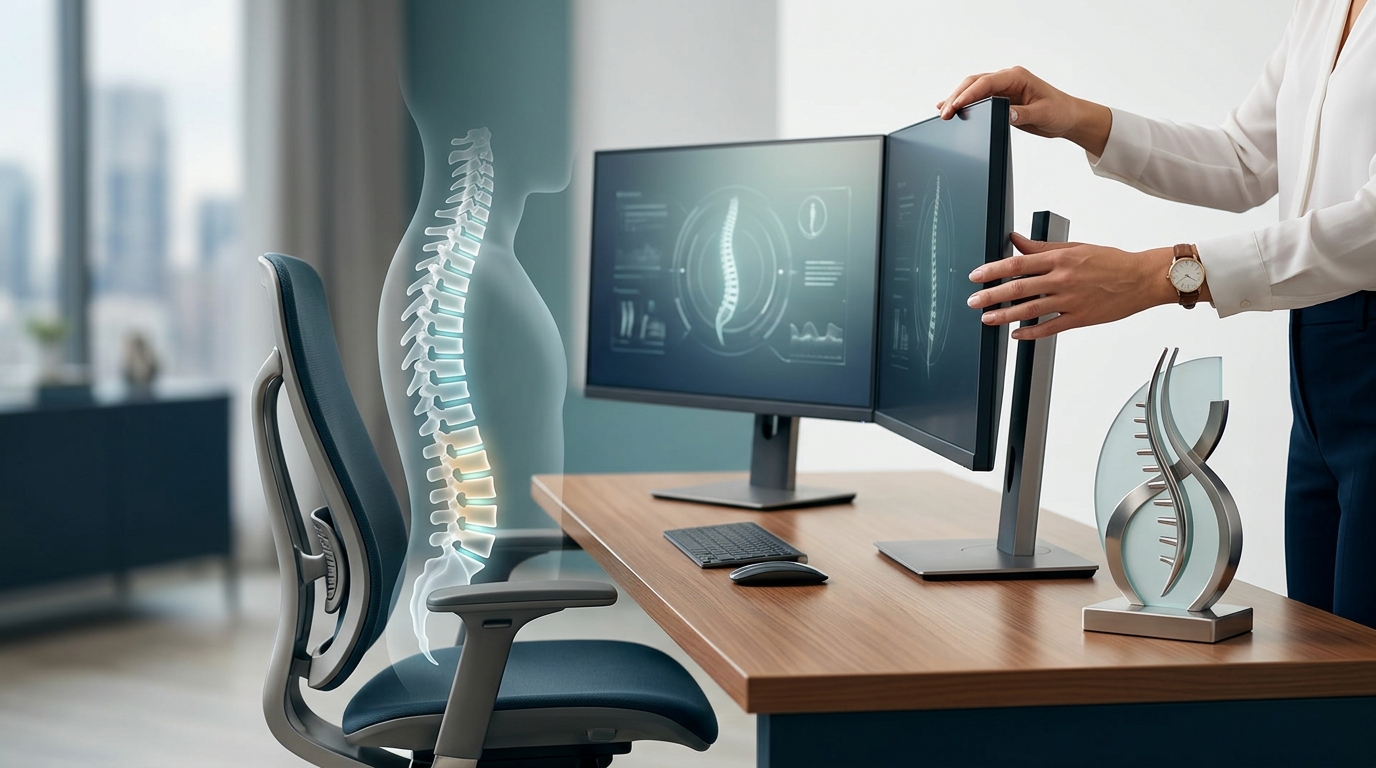
Your workspace should be designed to support your body, not the other way around. Follow these specific measurements to optimize your setup:
| Component | Ideal Positioning | Why It Matters |
|---|---|---|
| Monitor Height | Top third of the screen at eye level | Prevents cervical flexion (looking down) |
| Elbow Angle | 90 to 100 degrees, tucked to the side | Reduces strain on the trapezius and shoulders |
| Knee Position | Slightly lower than or level with hips | Maintains the lumbar curve and promotes circulation |
| Foot Placement | Flat on the floor or on a firm footrest | Provides a stable base for the pelvis |
Pillar 2: The 20-20-20-20 Rule for Spinal Health
Most people are familiar with the 20-20-20 rule for eye strain (every 20 minutes, look 20 feet away for 20 seconds). We have expanded this for the spine. Every 20 minutes, stand up for 20 seconds, and perform 20 shoulder blade retractions. This "micro-break" interrupts the static loading on your ligaments and re-engages the postural muscles of the mid-back.
Pillar 3: Active Posture Strengthening
Postural muscles are endurance muscles. They need to be trained to hold you upright for hours at a time. Key exercises include:
- Wall Angels: Stand with your back against a wall and move your arms in a snow-angel motion, keeping elbows and wrists in contact with the surface. This targets the rhomboids and lower trapezius.
- Chin Tucks: Gently draw your chin back (creating a "double chin") to strengthen the deep neck flexors and counteract Tech Neck.
- Planks: A strong core is the foundation of a healthy spine. Engaging the transverse abdominis prevents the pelvis from tilting too far forward or backward while seated.
When Home Remedies Aren't Enough: The Role of Professional Chiropractic Care
Even with a perfect ergonomic setup, existing misalignments (subluxations) can prevent your body from holding proper posture. This is where professional intervention becomes necessary. At Peachtree Wellness Chiropractic, we utilize the most advanced diagnostic tools in Georgia to identify exactly where your nervous system is being compromised.
Our approach to chiropractic adjustments goes beyond simple spinal manipulation. We focus on neuro-structural restoration. By correcting the alignment of the vertebrae, we remove interference from the nervous system, allowing your body to naturally adopt a more upright, healthy posture without conscious effort.
Advanced Technology for Remote Workers
For those suffering from long-term postural neglect, we offer state-of-the-art therapies that accelerate healing:
- Spinal Decompression: If years of slouching have led to lower back pain or disc issues, our non-surgical spinal decompression therapy can create negative pressure within the disc, encouraging rehydration and healing.
- K-Laser Therapy: To address the chronic inflammation in the soft tissues surrounding the spine, we utilize K-Laser therapy. This Class IV laser penetrates deep into the tissues to stimulate cellular repair and reduce pain instantly.
- Far-Infrared Massage: This therapy helps to relax hypertonic muscles that have been overworked by trying to compensate for poor posture, providing a deeper level of relief than traditional massage.
The Atlanta Professional’s Checklist for Daily Posture Success
- Morning Alignment: Start your day with 5 minutes of mobility work. Focus on opening the chest and hips.
- The Sit-Stand Switch: If possible, use a sit-stand desk. Change your position every 45-60 minutes. The "best" posture is always the *next* posture.
- Hydration and Movement: Place your water bottle far enough away that you have to stand up to reach it. This forces movement throughout the day.
- Evening Decompression: Use a foam roller or a postural wedge at night to reverse the forward-leaning posture of the workday.
Why Choice of Care Matters in Atlanta
Atlanta is a city of high performers, and your physical health should reflect your professional standards. Choosing a facility that understands the specific stresses of the modern digital worker is vital. At Peachtree Wellness, we don't just treat symptoms; we look at the whole person. Chronic headaches and migraines are often the result of tension held in the neck from poor computer placement. By addressing the root cause, we help our patients achieve a level of wellness that allows them to thrive in their careers and personal lives.
Postural Correction vs. Postural Support
Many people turn to posture braces or "corrector" shirts found online. While these may offer temporary relief, they can actually weaken your postural muscles by doing the work for them. Our goal is to empower your body to support itself through specific adjustments and rehabilitative exercises. We want your spine to be resilient, not reliant on external braces.
Frequently Asked Questions
Does a standing desk actually help with posture?
A standing desk is a tool, not a cure. If you stand with locked knees or lean heavily on one hip, you are simply trading one set of postural issues for another. The benefit of a standing desk is the ability to change positions frequently. We recommend a 1:1 ratio of sitting to standing throughout the day.
How do I know if my posture is causing my headaches?
If your headaches typically start in the afternoon, feel like a tight band around your head, or originate at the base of the skull, they are likely cervicogenic (originating from the neck). Improving your WFH setup and receiving regular adjustments can significantly reduce the frequency of these episodes.
Can chiropractic care help even if I've had bad posture for years?
Yes. The spine is remarkably adaptable. While long-term neglect may require a more intensive initial treatment plan involving spinal decompression or K-Laser therapy, significant improvements in alignment and pain reduction are possible at any age.
What is the most common mistake Atlanta workers make in their home office?
The most common mistake is working from a laptop without a separate keyboard and mouse. Using a laptop forces you to choose between looking down at the screen or reaching up to the keys. Elevating the laptop to eye level and using external peripherals is the single most impactful change you can make.
Conclusion: Take Control of Your Spinal Health Today
The transition to remote work in Atlanta doesn't have to mean a decline in your physical health. By implementing the ergonomic strategies outlined above and understanding how to improve posture while working from home Atlanta, you can protect your spine from the rigors of the digital age. However, remember that ergonomics can only support the structure you have. If your spine is already misaligned, no amount of equipment will fully resolve the issue.
If you are ready to experience the most advanced chiropractic care in Georgia and want to stop the cycle of pain and fatigue, Peachtree Wellness Chiropractic is here to help. Our expert team is dedicated to providing personalized care that addresses your unique postural needs. Don't wait for a minor ache to become a chronic condition. Book an appointment with us today and take the first step toward a healthier, more aligned future.